
An enterprise choosing an AI platform, a vendor deciding where to put its engineering resources, and an investor backing an AI company are all making a bet on the same thing. They want the technology they commit to today to gain support and become more valuable over time. A good demo can get a product onto the shortlist. The decision gets harder when people, code, data, and capital will be tied to it for years.
In their book The Gorilla Game, Geoffrey Moore, Paul Johnson, and Tom Kippola described how a handful of companies come to dominate high-tech markets. Their examples included Microsoft in operating systems and Cisco in networking. The original game was written for investors. In AI, enterprise buyers and technology partners are playing it too. All three want to protect the time and money they commit by spotting the technologies and vendors most likely to shape a market as it matures. The Gorilla Game.
Where AI Gorillas can emerge
AI spans chips, infrastructure, models, data platforms, and software that runs business workflows. Each layer has its own buyers, competitors, and economics. A company can become the default in one layer while depending on another company’s technology elsewhere. That makes defining the category the first move in the Gorilla Game.
A Gorilla candidate starts to stand out when other companies commit resources to building around it. Customers put it into production and expand their use. Developers learn its tools. Partners build and maintain integrations because customers ask for them. Each commitment can make the platform more useful to the next buyer and more attractive to the next partner. The same effect can help establish a technology standard, even when several vendors compete to supply it. For anyone placing a bet, it matters who captures the economic value created by that adoption.
Three players, three kinds of exposure
Enterprises – are betting on what they can deploy and support for years. An AI purchase can entail months of data integration, security reviews, evaluation, and employee training. A platform with a growing ecosystem gives the buyer more places to find skills, integrations, and support. The buyer also needs to know what it can take with it if the market shifts. For an AI memory platform, that means asking whether accumulated context can move with its source references, access permissions, and retention rules intact.
Vendors – are betting engineering time and access to customers. A partnership can consume a roadmap cycle through integration, certification, and joint selling. The strongest evidence comes from partners shipping products, winning shared customers, and earning enough from the relationship to keep investing. A vendor also has to judge whether its contribution will remain valuable as the platform expands into adjacent markets.
Investors – are betting that adoption will translate into durable economics. Rising usage becomes more meaningful when paid customers renew, expand to additional workloads, and attract an ecosystem that keeps investing. Investors also need to understand who controls distribution and who has pricing power. The supplier gaining users, the platform owning the customer relationship, and the infrastructure provider collecting revenue can be three different companies.
Play to Win
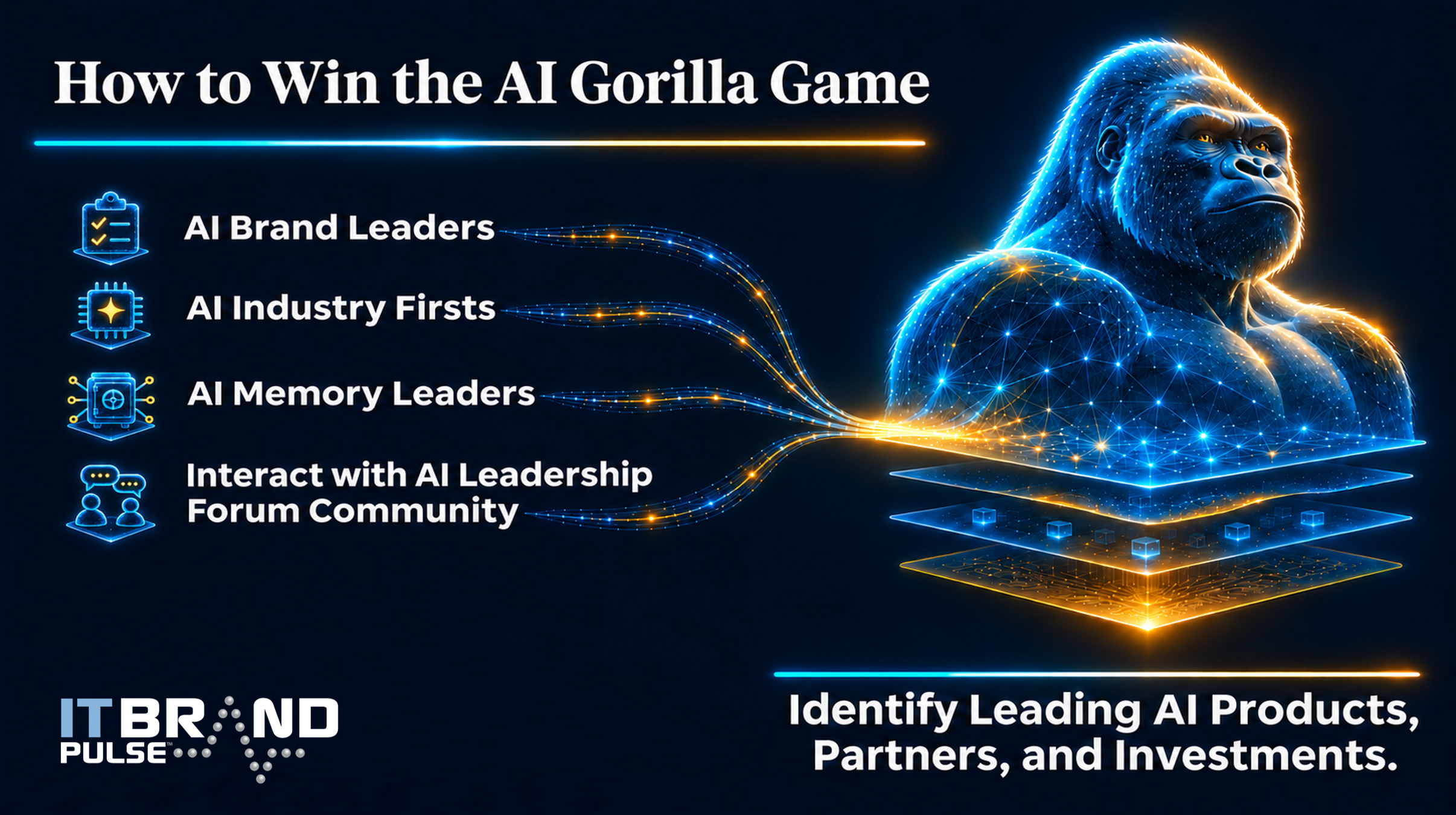
At IT Brand Pulse, we look for evidence that leadership is taking hold. Our AI Brand Leader research shows which vendors IT professionals and developers recognize as leaders in specific categories. That gives buyers, partners, and investors a view of market perception by category. Our AI Industry First research examines what vendors have actually introduced and why it matters. A first becomes more consequential when it solves a problem customers have and gives partners something they can build around.
Our research into Personal and Organizational AI Memory (POAM) looks at another source of durable leadership. As people and organizations accumulate useful context across applications and AI tools, the platform that makes that context accessible across workflows could become a durable point of control. Connector coverage, governance, and portability will help determine which offerings earn that role.
We also manage and work with the AI Leadership Forum community, where practitioners, researchers, and vendors compare what they are seeing. Those conversations surface questions that announcements and surveys alone may miss. What made it into production? What had to change to get it there? Where are customers and partners committing to a second deployment?
A future Gorilla starts to come into focus when several of those signals point in the same direction. Customers recognize the vendor, its technology solves a problem worth paying for, and other companies commit their own resources to building around it. IT Brand Pulse brings those signals together so enterprises, vendors, and investors can judge which AI leaders are earning the commitments that make market leadership last.
Learn More About
Personal and Organizational AI Memory Leaders
AI Leadership Forum Event Presentations