CXL offers a long list of capabilities, from larger server memories to shared memory across processors. Jim Handy of Objective Analysis began his Endless Memory with CXL presentation with a useful distinction: customers can adopt these capabilities one at a time. They do not need to wait for the most ambitious vision of a CXL fabric to find value today.
Handy’s market update identified two immediate reasons to pay attention. AI systems need more DRAM, while DRAM has become more expensive and harder to obtain. Those conditions make it worthwhile to revisit memory already installed in data centers and to reduce capacity stranded inside individual servers. Register for episode 1
DRAM economics are changing the calculation
Handy said DRAM contract prices were about three times their 2024 level at the time of his presentation. His spot-market chart showed an even sharper rise from mid-2025: approximately 7.1 times for the DRAM product tracked and 6.9 times for NAND. Spot prices are more volatile than contract prices, so those figures describe different parts of the market. Together, they show why memory cost has moved higher on the infrastructure agenda.
Handy also cautioned against assuming that today’s conditions will last indefinitely. DRAM is a cyclical commodity market, and he expects an eventual oversupply and price decline. His point was about the decision in front of operators now: when new memory is costly and supply is tight, existing capacity becomes more valuable.
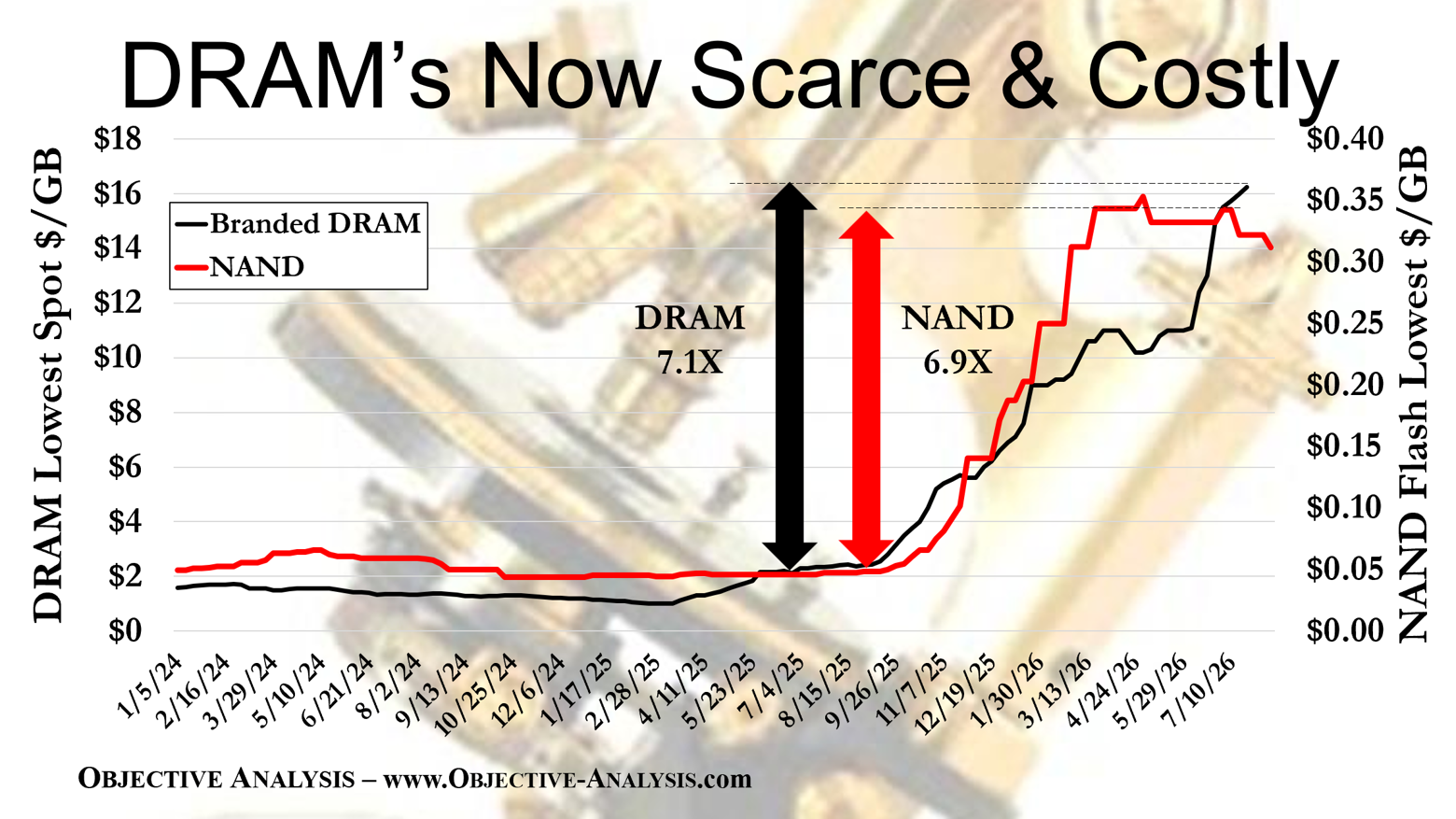
The 7.1× DRAM and 6.9× NAND figures are spot-market increases, separate from the contract-price comparisons
Giving DDR4 a second life
One of CXL’s most immediate uses is to put DDR4 from retired servers to work in newer systems. A CXL controller presents the attached memory to the host through a standard CXL interface. The new server does not need a native DDR4 memory channel to access DDR4 modules installed on a suitable CXL card.
Handy described hyperscalers removing DDR4 modules from decommissioned servers and installing them on CXL add-in cards for DDR5-based systems. Software can then place frequently accessed, or “hot,” data in local DDR5 and less frequently accessed, or “cold,” data in CXL-attached DDR4. That placement matters because CXL memory generally has higher access latency than local DRAM.
The economic case depends on more than the purchase price of new DDR5. Operators must account for the CXL card, controller, module qualification, software, and workload performance. But they may be able to increase server memory using DRAM they already own.
Handy pointed to Meta’s Vistara research as an example of this approach. He described a modest but meaningful throughput improvement, roughly in the single digits to low teens across the results he highlighted, when Meta added CXL-attached DDR4 to its systems. For a hyperscaler, even a modest gain across a large fleet can matter. Register for episode 1
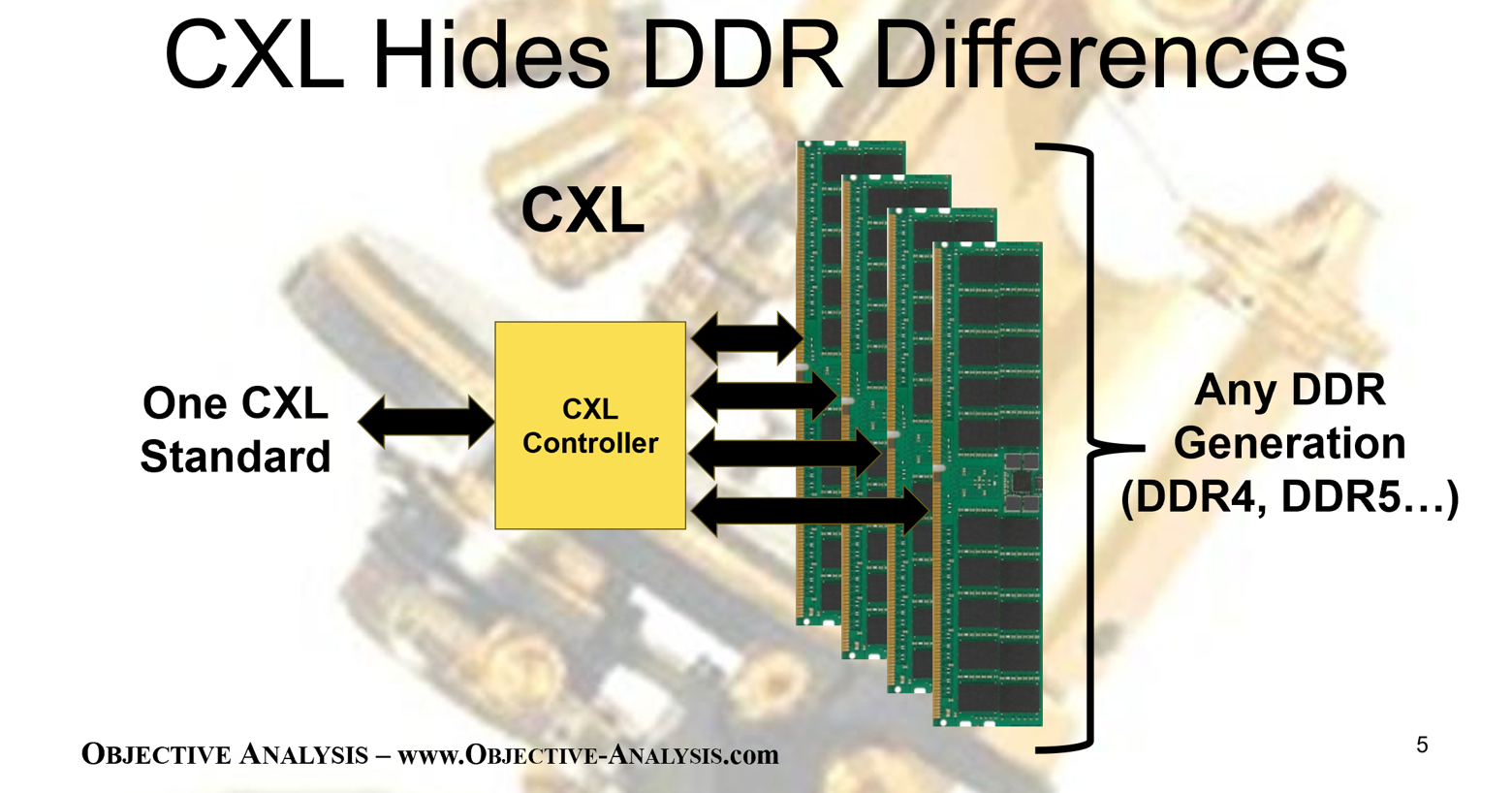
Hyperscalers harvesting DDR4: DDR4 is salvaged from decommissioned servers, CXL cards fit the DDR4 into DDR5-based servers, Caching software manages hot & cold data, Cold → DDR4 on CXL, Hot → Host’s DDR5
Pooling attacks stranded memory
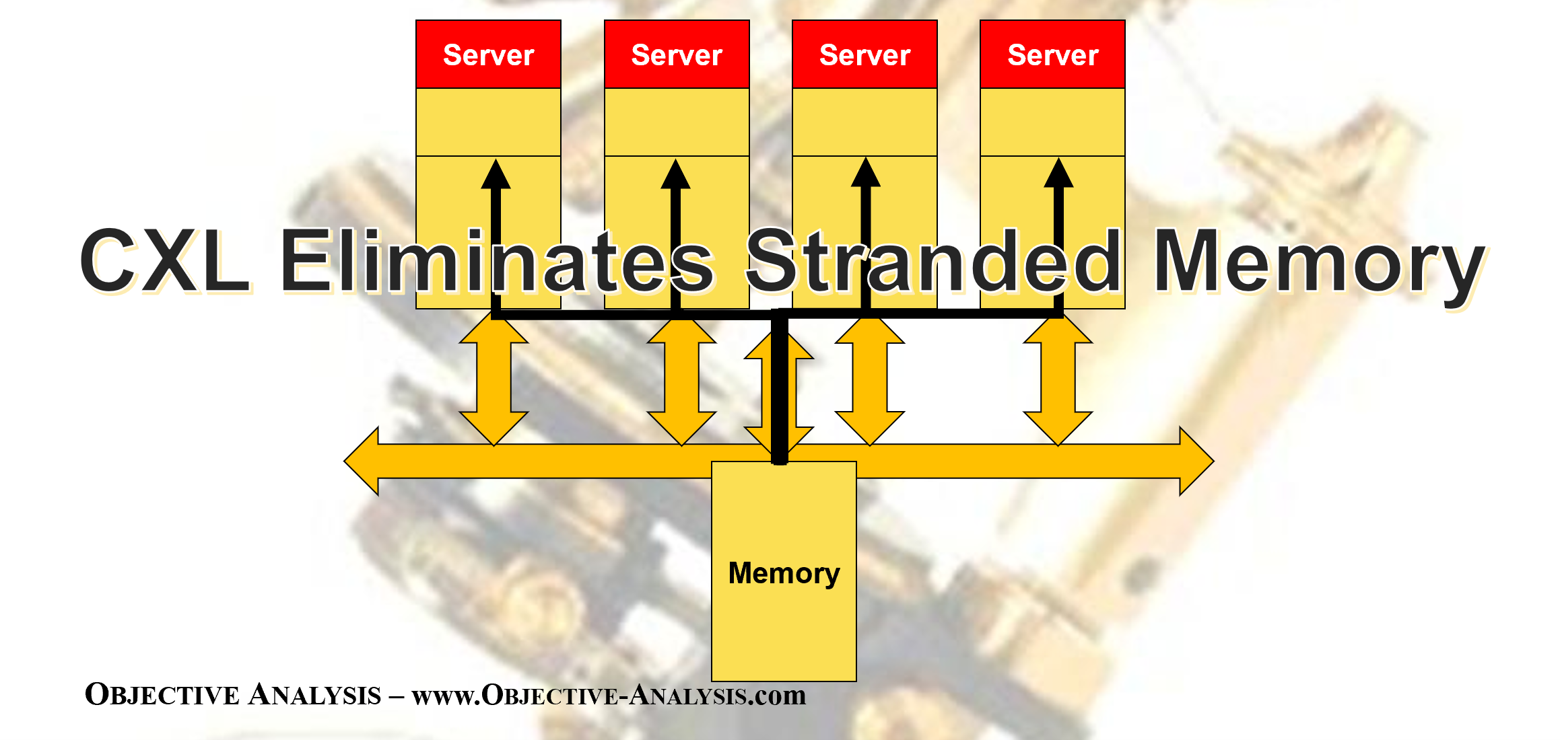
Handy’s second near-term opportunity was memory pooling. Consider a group of servers that occasionally run a workload requiring a large amount of memory. If the workload can move among servers, an operator might equip every server for its peak requirement, even though only one needs that extra capacity at a time. The unused memory is stranded.
A CXL pool offers another arrangement. Each server receives enough local memory for its normal load, while additional capacity sits in a shared pool. The system allocates that capacity where a larger workload needs it. As Handy put it, the operator no longer has to repeat the same reserve of memory in every server.
This is an especially clear economic argument when DRAM prices are high. Handy noted that the supporting software remains an important part of making pooling practical. Hardware access to a pool alone does not decide when capacity should move or how applications will use it. Register for episode 1
Other CXL capabilities serve different needs
Handy also examined bandwidth, support for different memory technologies, shared memory, fabrics, and coherency. These features address related but distinct problems.
On bandwidth, he noted that multiple memory modules behind a CXL controller can operate in parallel. The design still needs to be judged against the workload’s latency needs. CXL may be useful where added capacity and aggregate bandwidth outweigh the access delay relative to local DRAM.
A standard CXL interface could also let systems attach different generations or types of memory without requiring the CPU to implement a native channel for each one. Handy discussed emerging memories such as MRAM, resistive RAM, and ferroelectric RAM as longer-range possibilities.
Shared memory and fabrics extend the idea further, allowing processors to access data across a larger system while maintaining a consistent view of it. Handy treated these as important capabilities, while making clear that broad fabric use is further out than today’s DDR4 reuse and server memory expansion. Register for episode 1
A steady market, led by practical uses
Objective Analysis forecasts CXL revenue reaching approximately $16 billion by 2031. Handy described a market that grows steadily as customers apply CXL where it solves a specific problem, with high DRAM costs providing a particularly strong incentive today.
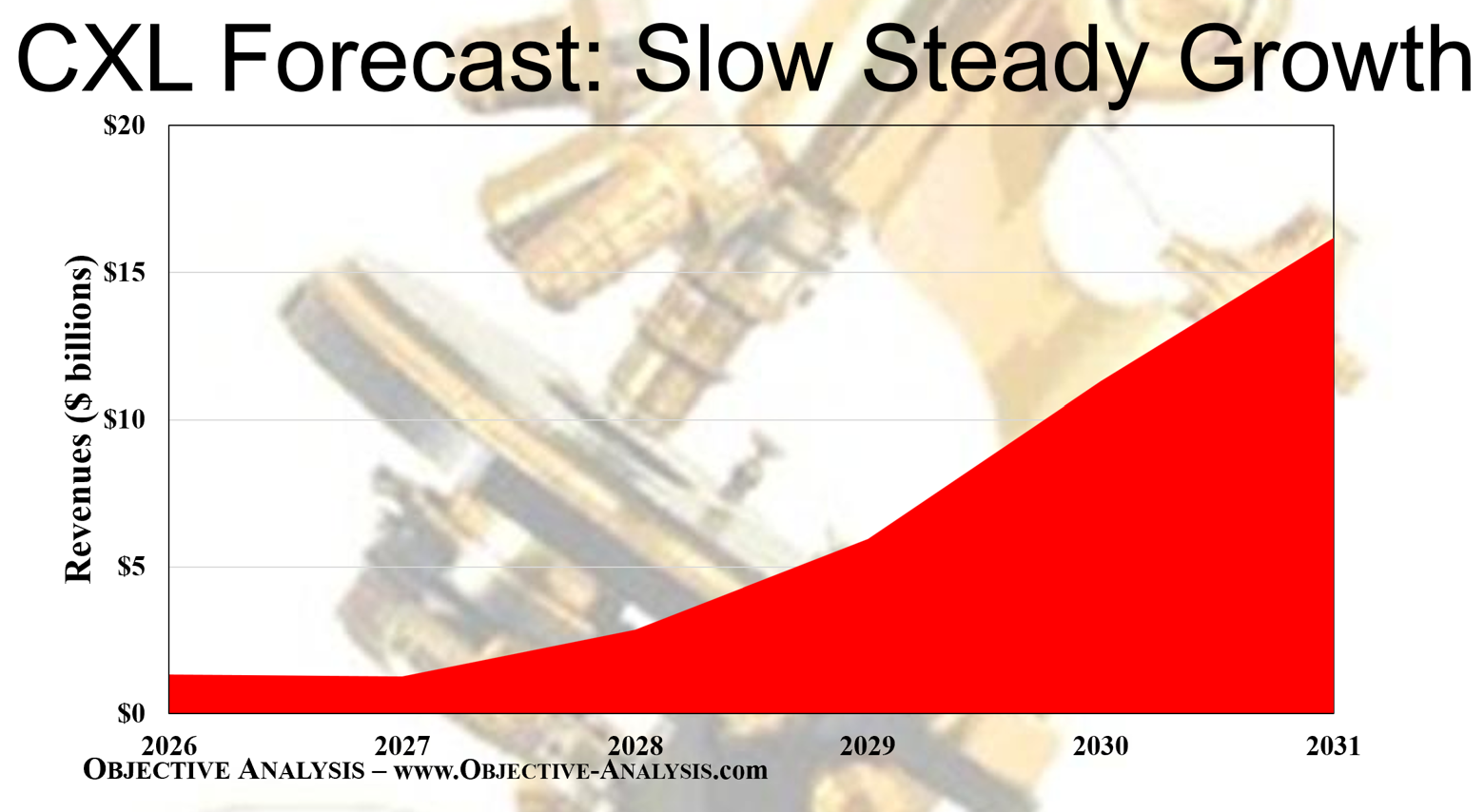
That measured outlook is useful. CXL’s value does not depend on every server adopting every feature. Reusing qualified DDR4 can lower the amount of new DRAM an operator needs to buy. Pooling can reduce memory stranded across a fleet. Other applications can follow as platforms, software, and workloads mature.
Handy’s session left infrastructure planners with a practical question: where is memory sitting idle or reaching a capacity limit today, and would a CXL design make that capacity more useful at an acceptable cost and performance?
Jim Handy will return for Episodes 2, 3, and 4 of Endless Memory with CXL with additional market data and analysis. Infrastructure teams need that perspective to separate promising demonstrations from broad adoption, judge whether DDR4 reuse and memory pooling make economic sense, and plan purchases as DRAM prices and supply change. Jim will track those shifts throughout the series, giving attendees a clearer basis for their CXL decisions.
Register for episode 1 – CXL Market Overview
Register for episode 2 – KV Cache with CXL Memory
Register for episode 3 – Meta and Penguin Solutions on Reusing DDR with CXL
Register for episode 4 – Pacific Northwest National Labs (PNNL) Abaco CXL Memory Pooling System