Enterprise customer communications are splintering. Voice calls still matter for high-intent moments (appointments, escalations, urgent support), but customers increasingly expect messaging-first experiences on WhatsApp and embedded web chat. Meanwhile, the AI voice agent market is exploding, with vendors promising “human-like” automation, but often delivering a brittle stack of stitched-together components: one provider for telephony, another for speech, another for the LLM, and a separate tool for messaging.
That fragmentation creates a familiar pattern for agencies and enterprises trying to deploy AI agents in production:
- Complex integration work just to get a first agent running
- Hidden costs as “low per-minute pricing” balloons once BYOK (bring-your-own-key) LLM and voice fees appear
- Channel gaps where “omnichannel” really means text-only, or voice-only
- Brand friction where resellers are forced to expose the underlying vendor to customers
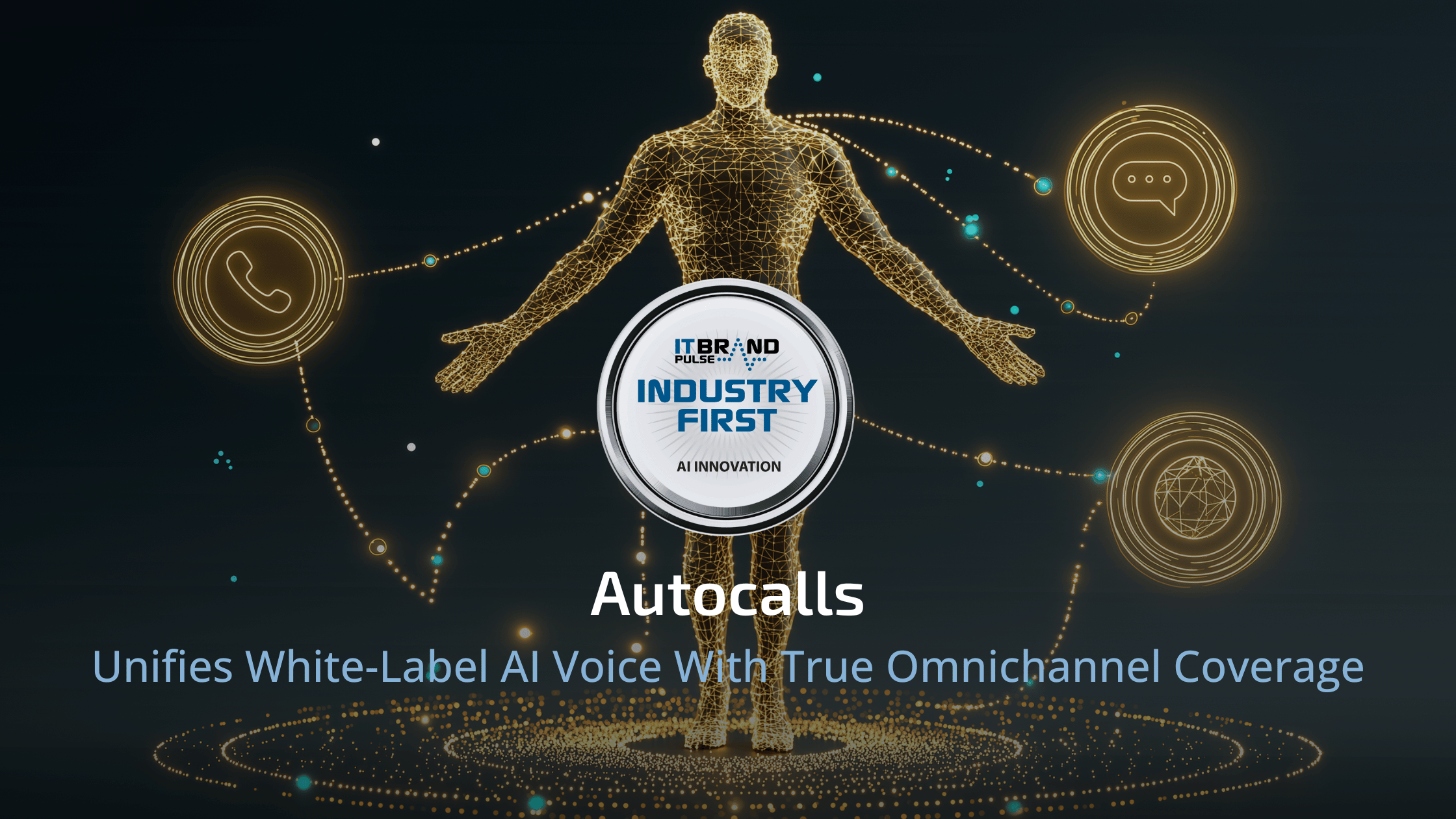
Autocalls’ latest platform expansion targets this exact pain point with a tightly defined industry first: the market’s first offering that combines full white-label functionality with omnichannel coverage across voice calls, WhatsApp, and chat, at a single, all-inclusive price.
It’s a claim that matters because it’s not “one more feature.” It’s a change in operating model: agencies and enterprises can now treat AI-driven communications as a single deployable product rather than three loosely connected projects.
Why the Market Needed This: The “AI Comms Stack Tax”
In practice, many AI voice deployments fail to scale because teams underestimate the “stack tax,” the hidden time and cost of assembling production-grade conversations across channels.
Autocalls describes the historical enterprise approach as a split purchase: procure AI compute and capabilities in one place and then rely on telecom or shared networking models to connect everything. In communications AI, the equivalent is buying voice automation, messaging automation, and web chat separately, then trying to unify identity, routing, analytics, and compliance yourself.
Autocalls’ platform reframes the problem: buyers don’t want a voice demo; they want a production system. That means multi-channel coverage, predictable cost, and a workflow builder that non-technical teams can actually operate.
The Industry First: White-Label + Omnichannel (Voice, WhatsApp, Chat)
The most defensible part of Autocalls’ “industry first” is the specific combination of:
- Full white-label capability
- True omnichannel coverage across:
- phone calls
- web chat
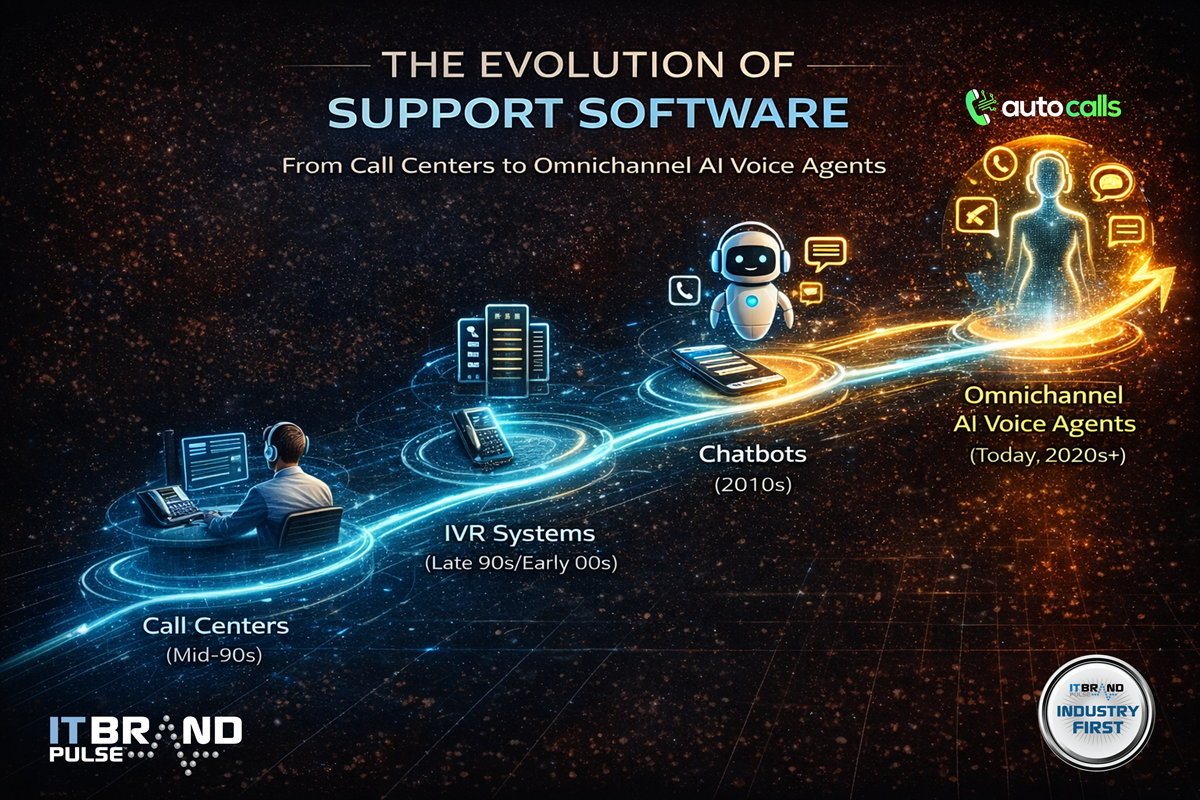
Unified White-Label AI Voice With True Omnichannel Coverage
Many platforms offer some form of “omnichannel,” but focus primarily on text channels. Others focus on voice but treat WhatsApp or chat as separate add-ons. Autocalls is explicitly packaging these channels into a single white-label partner platform intended for resellers, agencies, and enterprises.
For partners, the white-label model includes the ability to run the entire experience under their own brand, custom domains, branding control, and customer-facing ownership, rather than acting as a mere referral agent. Autocalls’ own white-label program emphasizes “zero Autocalls branding” and the operational features required for reselling (such as partner support and platform customization).
Omnichannel That Starts With Voice (Not Just Text)
Why does starting with voice matter?
Because voice is the hardest channel to get right in production. It requires low latency, reliable turn-taking, consistent audio quality, and tooling that can handle “real-world messy” conversations. Autocalls’ expansion highlights that the platform now unifies voice calls with WhatsApp and chat in one deployable product, meaning a customer can start in one channel and continue in another without the reseller having to re-architect the stack.
Autocalls also publishes ongoing product updates showing investment in WhatsApp agent capabilities, including richer message handling like voice message transcription and image understanding via vision-capable models.
Evidence of Production Thinking: Dualplex, No-Code, and Integrations
Autocalls emphasizes a practical reality: it’s easy to create a first agent; it’s hard to make it reliable in production. Their approach combines a no-code build experience with “conversational pathways” (structured nodes) so teams can guide outcomes (like booking meetings) rather than relying purely on open-ended Q&A.
The platform also reflects a clear focus on operational scale. The agency tier supports up to 500 parallel concurrent calls, and deployment can be completed in as little as 15 minutes using the guided no-code wizard, signaling a system designed for production rollout rather than experimental demos.
At the core of the voice system is Dualplex™, Autocalls’ proprietary voice processing technology that enables full-duplex conversation with near-zero latency and intelligent interruption handling. Unlike standard half-duplex implementations where the AI waits for silence before responding, Dualplex allows natural overlapping speech patterns. The result is a more fluid conversational rhythm that reduces the “talking to a robot” effect that can quickly erode caller trust.
On integrations, Autocalls markets broad connectivity via its no-code platform and large integration catalog, important for enterprise workflows that require CRM lookups, ticket creation, appointment scheduling, identity verification, or order status retrieval.
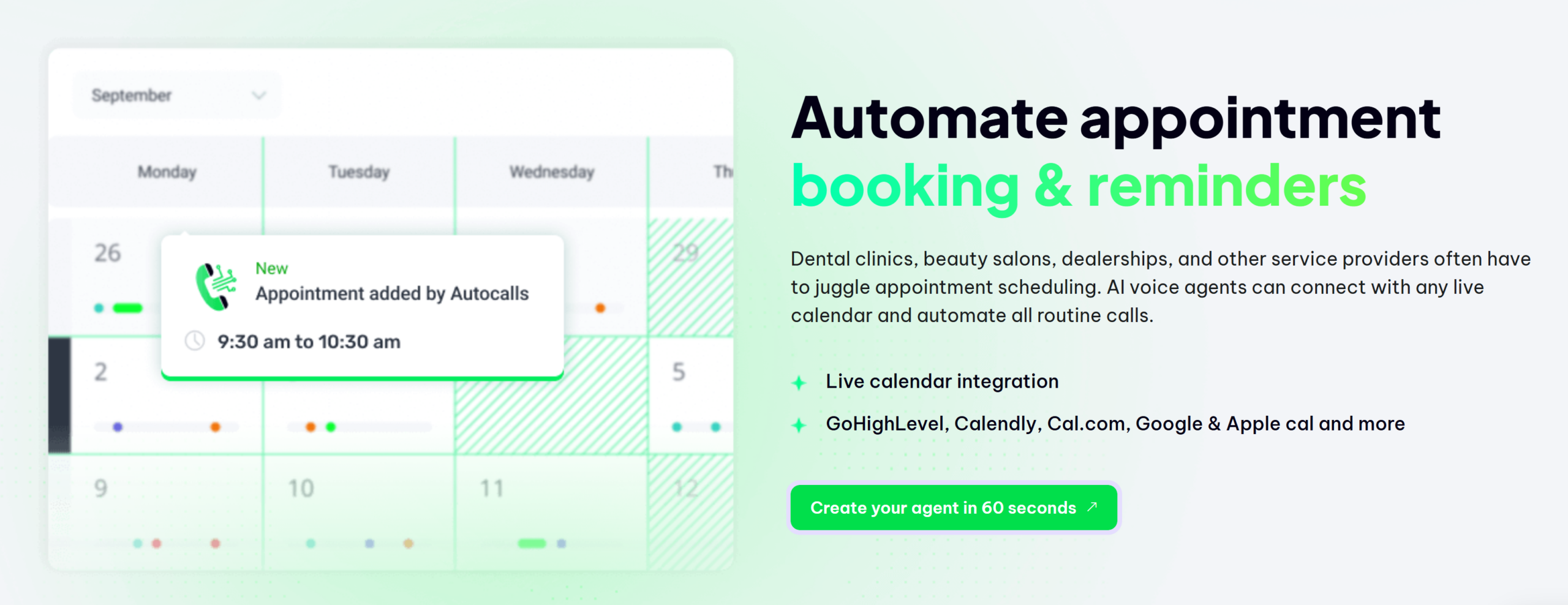
AI automated appt. booking
Pricing as a Strategic Differentiator: “All-Inclusive” at $0.09/Minute
Autocalls also makes pricing part of the industry-first story: a single, transparent rate intended to include the core elements that often get externalized to BYOK costs (telephony, speech, and model usage).
To put this in perspective: platforms that advertise rates as low as $0.05–$0.07 per minute typically require customers to bring their own API keys for LLMs, speech synthesis, and transcription. Once those components are added, real operating costs often climb to $0.20 per minute or more.
Autocalls’ $0.09 per minute pricing includes OpenAI, ElevenLabs, Cartesia, and Deepgram out of the box, positioning the platform as a predictable full-stack communications service rather than a pricing teaser that hides downstream costs.
Whether you’re an agency reselling services or an enterprise budgeting for scale, predictable unit economics is the difference between “pilot” and “program.”
What This Looks Like in Practice: A Real Deployment Scenario
Consider a digital marketing agency that wants to offer AI-powered customer communications to its clients.
With Autocalls’ white-label platform, the agency can deploy a fully branded AI assistant for a dental clinic, handling appointment confirmations via voice calls, sending follow-up reminders through WhatsApp, and answering patient inquiries through the clinic’s website chat.
All of this operates under the agency’s own brand.
The same agency can replicate that setup for a real estate brokerage, an auto dealership, or a home services company. Each client receives its own branded assistant and workflows, but all deployments run on the same underlying platform.
No custom development is required.
That’s the operational leverage a unified white-label omnichannel platform unlocks: one platform, many clients, every channel.
Market Impact: A New Default for AI Communications Providers
If Autocalls’ model holds, it sets a new expectation for the AI voice and communications automation market:
- AI agents will be sold as branded products (white-label as default for agencies and platforms)
- Omnichannel will mean voice + messaging + chat, not “text-only with a voice plugin”
- Pricing will be evaluated as a complete stack cost, not a single line item
The biggest shift is operational: Autocalls is packaging the whole deployment surface area—channels, branding, integrations, and economics, into one offering. That’s exactly the kind of convergence that turns a fragmented market into a platform category.
Industry firsts aren’t about being first to add WhatsApp or first to white-label.
They’re about being first to combine the set in a way that changes how buyers deploy and monetize the capability.
Autocalls’ claim is that this combination, full white-label + true omnichannel across voice, WhatsApp, and chat, is that step-change.
AI Industry Firsts Validated by IT Brand Pulse
AI Industry First spotlight the breakthroughs themselves, the moments when companies deliver genuine firsts that reset expectations, create new categories, or change how markets operate. AI Brand Leaders voted by humans and validated AI Industry Firsts together tell the full story of leadership in the AI era: who is leading and what is moving the industry forward. We invite readers to explore both perspectives to gain a complete view of how innovation and brand leadership intersect. We’re happy to cover your industry first. Just let us know.